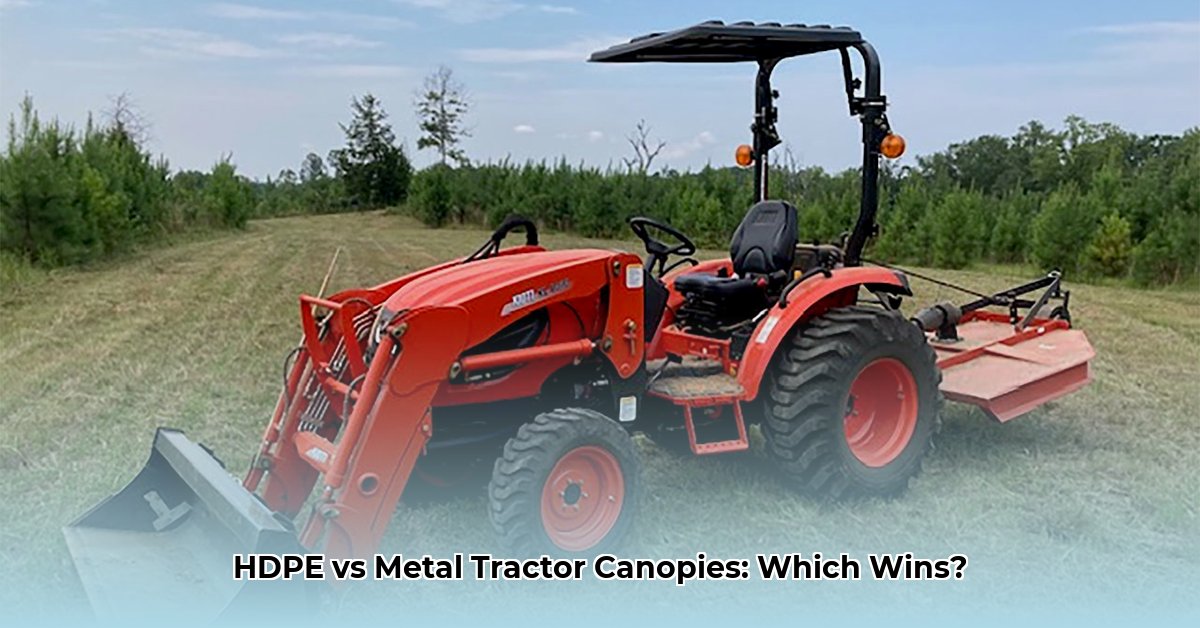
Choosing the right tractor canopy significantly impacts your safety and comfort. This guide compares high-density polyethylene (HDPE) and metal canopies, helping you make an informed decision based on your specific needs and budget. We'll cover installation, maintenance, and key differences to ensure your canopy provides years of reliable protection. For more information on Ford tractor canopies, see this helpful resource.
HDPE Tractor Canopies: Lightweight and Affordable
HDPE canopies are known for their lightweight design, making them easy to handle and install, especially for solo operations. Their impact resistance provides decent protection against smaller debris. However, their color options are limited, and prolonged sun exposure can lead to degradation. Regular cleaning and UV protectant application are crucial for longevity maximizing its lifespan.
Pros:
- Lightweight and easy to install, often a solo job.
- Cost-effective, representing a significant savings compared to metal options.
- Good impact resistance against smaller flying objects like pebbles and small branches.
Cons:
- Limited color choices, often restricted to a few basic colors.
- Susceptible to UV degradation; requires regular application of UV protectant.
- Lower impact resistance than metal canopies; less effective against larger, heavier impacts.
Installation Steps:
- Read the Manual: Carefully review the manufacturer's instructions before beginning.
- Gather Tools: Basic hand tools such as wrenches and screwdrivers are typically sufficient.
- Prepare ROPS: Clean the Roll Over Protective Structure (ROPS) on your tractor ensuring it is free of debris.
- Secure Attachment: Follow the instructions precisely to attach the canopy, confirming all bolts are securely tightened.
- Final Inspection: After installation, perform a thorough inspection to ensure all connections are secure.
Metal Tractor Canopies: Durable and Strong
Metal canopies, usually steel or aluminum, offer superior strength and durability. They provide excellent protection against larger impacts like falling branches and rocks. However, their weight requires assistance during installation, often necessitating lifting equipment. Corrosion is a potential issue, especially in humid environments. Regular cleaning and anti-corrosive treatment are vital for long-term performance.
Pros:
- Superior strength and durability, effectively withstanding significant impacts.
- Wider range of color options, offering greater aesthetic customization.
- More resistant to impacts and harsh weather, providing reliable long-term protection.
Cons:
- Heavyweight, requiring at least one helper for installation, possibly specialized lifting equipment.
- Susceptible to corrosion; regular cleaning and anti-corrosive treatment are essential for longevity.
- Higher initial cost compared to HDPE canopies.
Installation Steps:
- Teamwork: At least one additional person is essential for safe installation. A lift may be required.
- Safety Gear: Wear gloves and safety glasses.
- Precise Positioning: Carefully position the canopy on the ROPS, ensuring proper alignment and level positioning.
- Secure Fastening: Utilize appropriate lifting equipment if needed and securely fasten all the bolts.
- Final Check: Thoroughly inspect the installation for secure attachments and stability.
HDPE vs. Metal: A Direct Comparison
This table summarizes the key differences for easy comparison:
| Feature | HDPE Canopy | Metal Canopy |
|---|---|---|
| Weight | Lightweight | Heavy |
| Cost | Low | High |
| Durability | Moderate; UV Degradation Risk | High; Corrosion Risk |
| Color Options | Limited | Wide range |
| Maintenance | UV protectant application | Anti-corrosive treatment needed |
| Installation | Relatively easy | Requires assistance and equipment |
Choosing the Right Canopy: Prioritize Your Needs
Selecting the best canopy depends on individual requirements:
- Budget: HDPE is more affordable; metal provides long-term value.
- Protection Needs: HDPE suffices for sun and light rain; metal offers superior impact protection.
- Installation Capabilities: HDPE is easier for solo installation; metal requires assistance and potentially lifting equipment.
- Tractor Compatibility: Ensure compatibility with your tractor's ROPS dimensions and weight capacity.
Installation Best Practices and Safety
Safe installation is paramount regardless of material choice:
- Manufacturer's Instructions: Always follow the manufacturer's detailed instructions.
- Secure Mounting: Ensure the canopy is firmly and safely attached to the ROPS.
- Appropriate Tools: Use the correct tools for the job, to prevent damage and injury.
- Safety First: Wear appropriate personal protective equipment (PPE).
- Regular Inspections: Regularly inspect for signs of wear or damage.
By carefully weighing these factors, you can confidently choose a tractor canopy that meets your needs and ensures your safety for years to come. Remember, a well-maintained canopy is a safe canopy.